My seven-day K5X-pedition to China fundamentally sharpened my perspective on global trade. After gaining deep insights into Asian infrastructure – from current tech trends, to the offline expansion of JD.com to the margin trap in social commerce – this fourth and final part of the blog series now draws the strategic conclusion.
This brings into focus a dynamic that is still completely underestimated in Europe. When we talk about Chinese e-commerce in Europe, images of cheap fast fashion and aggressive price-cutters often dominate. However, this perspective is dangerously outdated. The real threat – and simultaneously our biggest strategic challenge – lies on a completely different level.

At a Glance: The Facts on China's New Wave of Expansion
- R&D and the Premium Shift: China has completed the transformation from the "world's factory floor" to an innovation leader. Analyses by European economic institutes and chambers of commerce show that China's investments in Research and Development (R&D) are increasing so massively that they have now even surpassed the average of established OECD countries. (Flanders-China Chamber of Commerce, 2025)
- High-Speed Logistics to Europe: The New Silk Road acts as a massive accelerator of export pressure. Via the expanded rail network, freight trains from hubs like Chongqing now take an average of only 13 to 15 days to reach central European logistics hubs such as the Port of Duisburg. (ifo Institut, 2025)
- Cross-Border Growth: Driven by a saturating domestic market, Chinese cross-border e-commerce exports are exploding. Current industry data confirms that the big players from Asia massively dominate the global cross-border volume, pushing the global market volume towards the trillion-dollar mark and attacking European market shares. (Fulfin, 2025)
The Premium Shift: From Producer to Innovator
One of the most impactful learnings from the tech trip was the uncompromising level of quality that Chinese manufacturers have now achieved. The Western cliché of cheap, faulty "Made in China" products no longer applies. We are currently witnessing a massive premium shift.
Chinese brands are no longer building solely for the lower price segment. Whether in the automotive industry, consumer electronics, or fashion: these companies have invested enormously in research, development, and design. Today, they present themselves as confident premium alternatives that can easily compete with established European or American brands in terms of quality, manufacturing standards, and technological innovation – often even with a significantly higher iteration speed.
Export Pressure and Logistics: The New Silk Road
These new premium products are pushing into our market with tremendous momentum. The reason for this is macroeconomic: the Chinese domestic market is becoming saturated. To maintain their immense production volume and growth, companies have only one option – a massive expansion of exports.
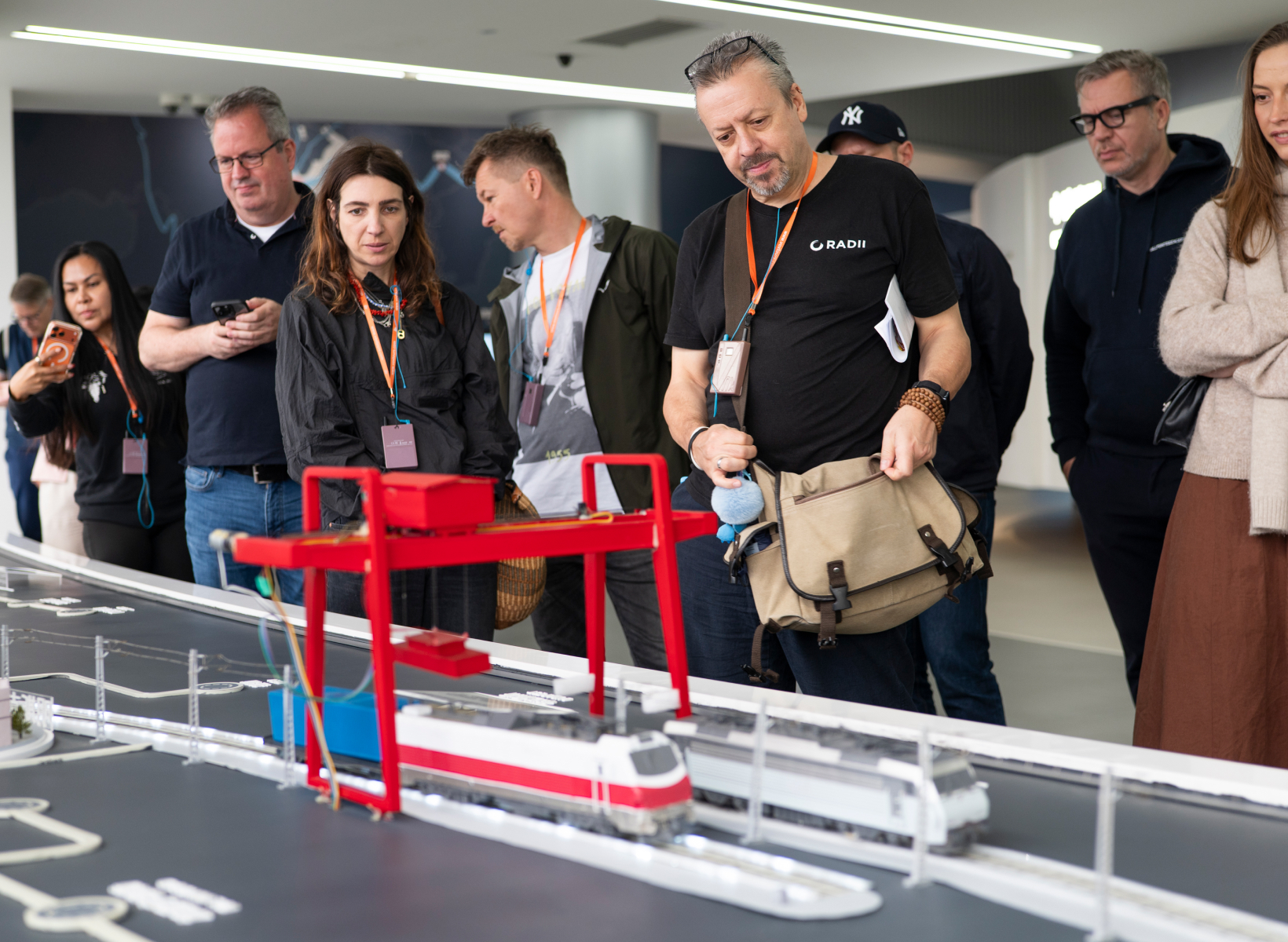
Our visit to Chongqing, one of China's most important industrial and logistical hubs, demonstrated how systematically this export pressure is being channeled. The infrastructure of the "New Silk Road" (Belt and Road Initiative) has been perfected in recent years. Freight trains loaded in Chongqing now reach the strategically important port of Duisburg in just 13 to 15 days. This logistical masterpiece closes the geographical gap to Europe and enables Chinese brands to seamlessly extend their high-frequency supply chains right to our doorstep.
The Cross-Border Strategy
Jianggan Li's (Momentum Works) masterclass made it clear that this push into Europe is no coincidence, but rather the result of highly professional strategies. In his session, he analyzed in detail how Chinese internet companies and e-commerce players are expanding internationally.
The success of this expansion is based on a clear playbook: Chinese companies leverage their technological infrastructure, proven in a tough domestic market, and combine it with unparalleled operational efficiency. They bring the backend (the highly optimized supply chain) with them, but localize their frontend extremely quickly and agilely for each target market. They learn rapidly from mistakes, adapt to local consumer needs, and scale with a financial and human resource commitment that often overwhelms Western competitors.
What We Need to Do in Europe Now
Given this development, I recommend to companies here: Focus on your edge! We must radically question where our true value creation lies. For retail, this leads to three guiding principles:
1. Uncompromising Excellence in Product or Curation
Mediocrity will no longer be tolerated in the future. Either we build uncompromisingly good, proprietary products, or we win over customers in retail through the best curation and outstanding service. This is also where the opportunity for physical spaces lies, as we see with new store concepts – more on this in Part 2 of this blog series.
2. AI as a Consistent Driver of Value Creation
All of this will only work in the future if it is consistently driven by the use of Artificial Intelligence. AI is the lever to scale outstanding service and curation to the necessary level and at the required speed.
3. Maximally Lean Hierarchies
The agility with which players like JD.com adapt and roll out their strategies is unparalleled. If we want to withstand this direct competition, our own organizational structures must allow for this speed. Lean hierarchies are a fundamental prerequisite for this.
My Conclusion After Seven Days of China Deep Dive
The week in China was intense and eye-opening. If the four parts of this blog series have shown one thing, it's this: We must neither underestimate the Asian market dynamics nor simply copy them blindly. We need to understand the underlying system and find our own strong European responses.
In any case, I remain incredibly curious to see how this global trade structure will evolve in the coming months and years, and how the European market will react to these challenges. The speed with which innovations are built and scaled in China is breathtaking.
This was certainly not my last trip to China, and I will continue to follow these rapid developments directly at the source in the future.
Until then, for us, it's all about: Focus on your edge and do your homework!
.jpg)