This successful customer project shows how a corporate vision can be translated into a functioning user experience through a consistent AI-First approach — a benchmark for seamlessly combining well-founded AI strategy and successful implementation in innovative design projects.
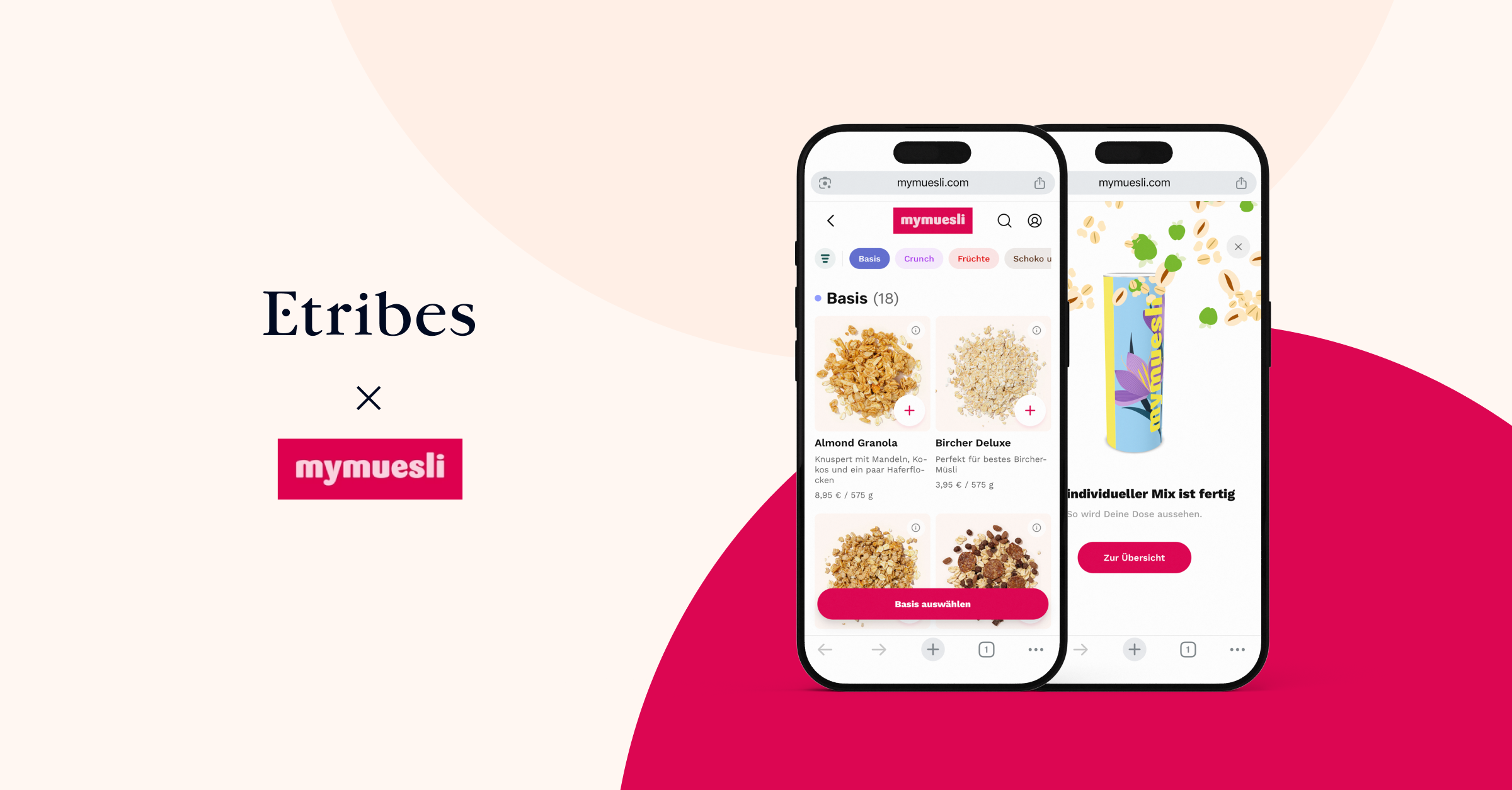
Why the mymuesli mixer needed a new user experience
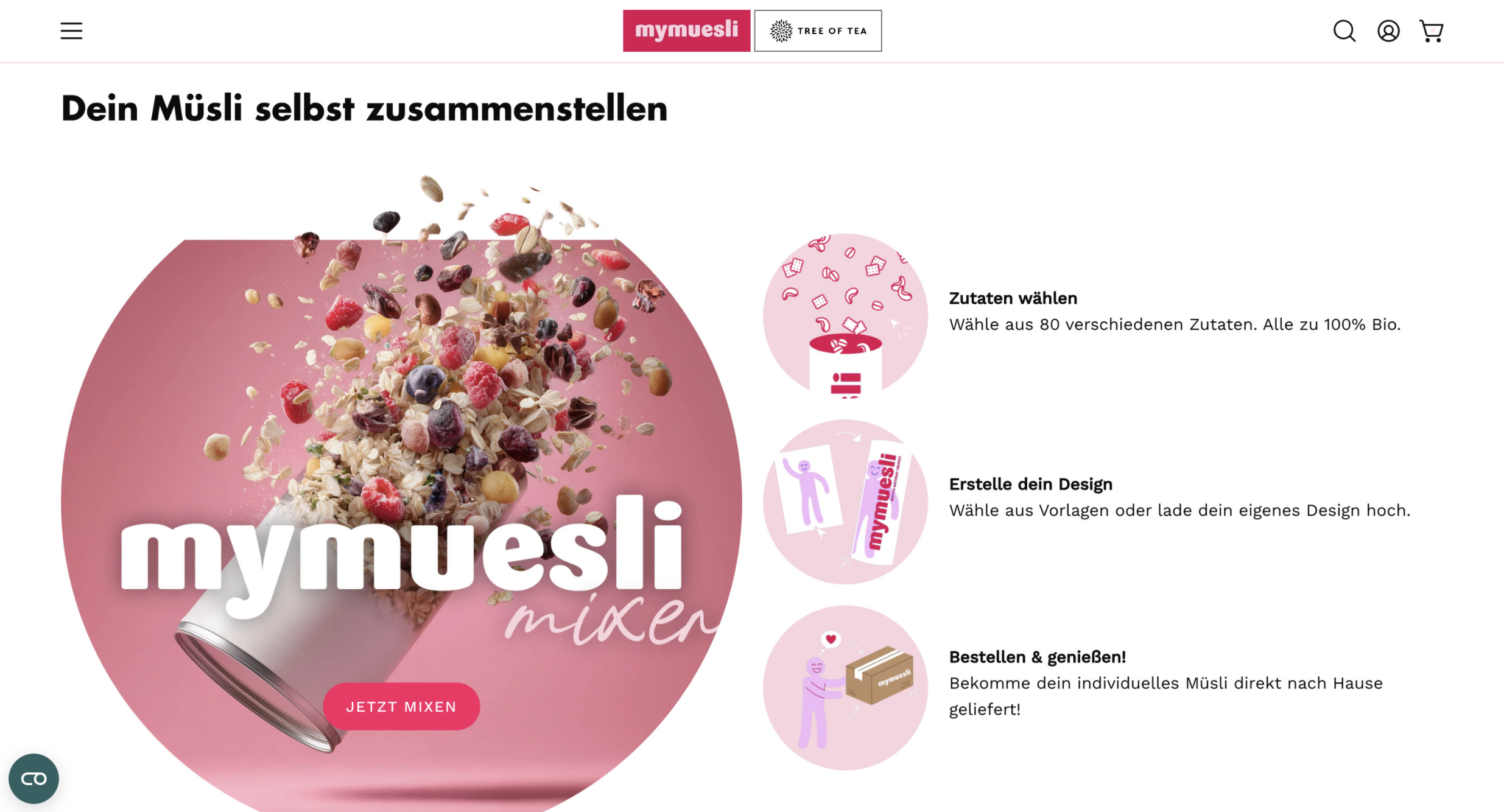
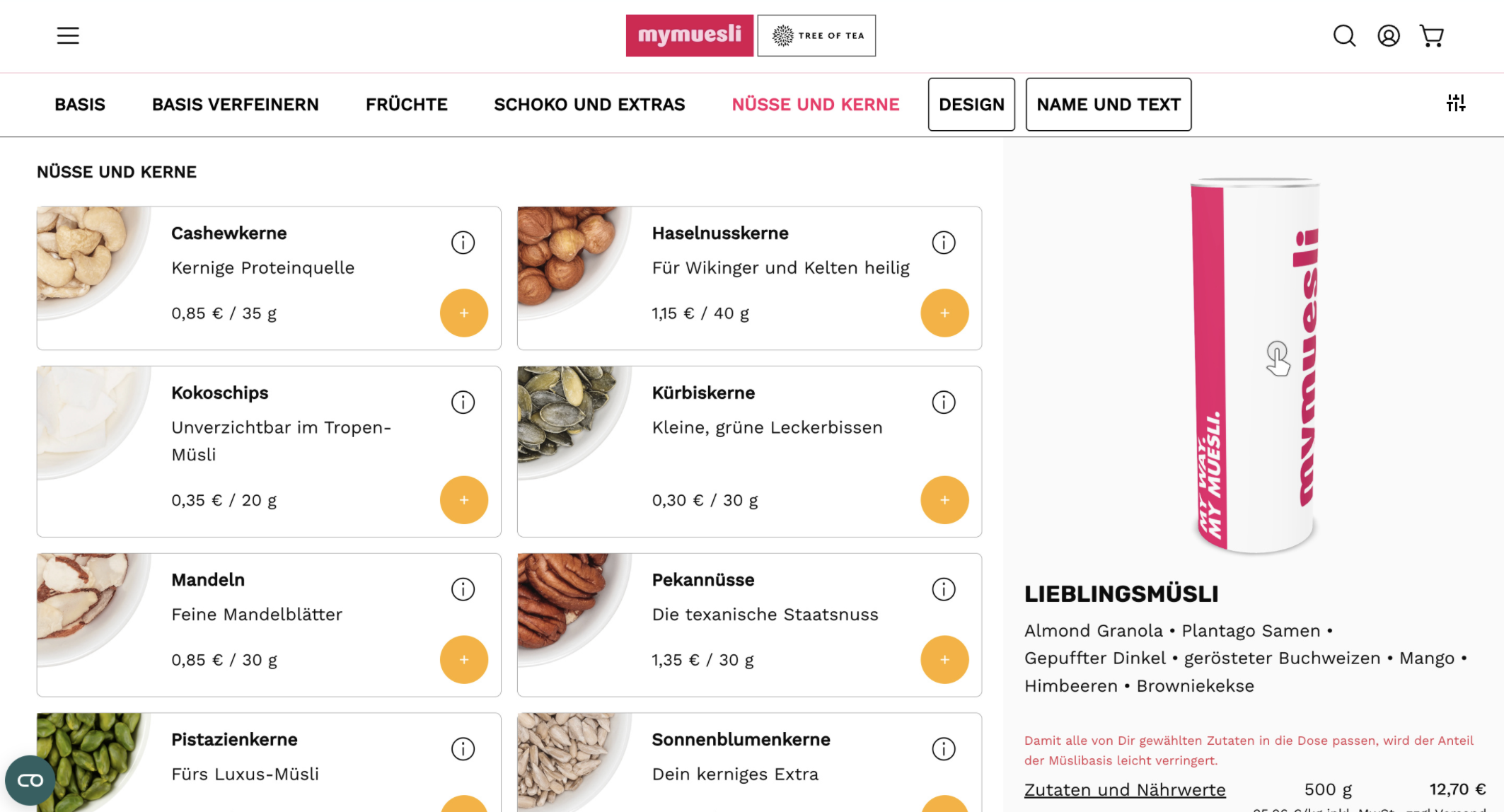
In a challenging e-commerce environment, an important transformation phase began for mymuesli with a newly established management team. The digital heart of the brand proved to be the central lever: the individual cereal mixer. After several technology and system changes in the past, the existing configurator had moved away from the usual myMuesli branding. For customers, the application felt like a separate product, which made the user experience and brand loyalty difficult. The goal for the relaunch: UX and technology should work seamlessly together again to make the digital experience more intuitive for users and more agile for the company.
In order to fully exploit the potential of its own cereal creations and customizable cans — whether for everyday use or as a popular gift — the company made a pioneering choice. The entire relaunch project was consistently set up “AI first”, as this was the only way to realize the ambitious vision with maximum efficiency and speed. The management's goal is clear: mymuesli is positioning itself as an innovative, tech-driven food brand beyond the mere shop function. As a partner for comprehensive AI consulting in e-commerce, Etribes accompanied this journey from the initial strategic idea to going live.
The UX transformation of the MyMuesli mixer
The purely functional level of cereal mixing was no longer sufficient to retain users in the long term. A central problem of previous mobile UX was the so-called “Decision Paralysis”: When scrolling endlessly through over 80 ingredients, users quickly lost track of the price and the ideal mix ratio on their smartphones. In addition, the mixing process lacked the necessary flexibility — the subsequent change or deletion of ingredients was complicated and often led to usability problems.
The requirements for the redesign were clear: transparency and flexibility had to be radically increased. Instead of rigid error messages, smart nudges now guide you through the mixing process. A dynamic bar also visualizes the current mix ratio and price at any time. But the new mixer should not only remove old hurdles, but also actively awaken needs through a modern user experience.
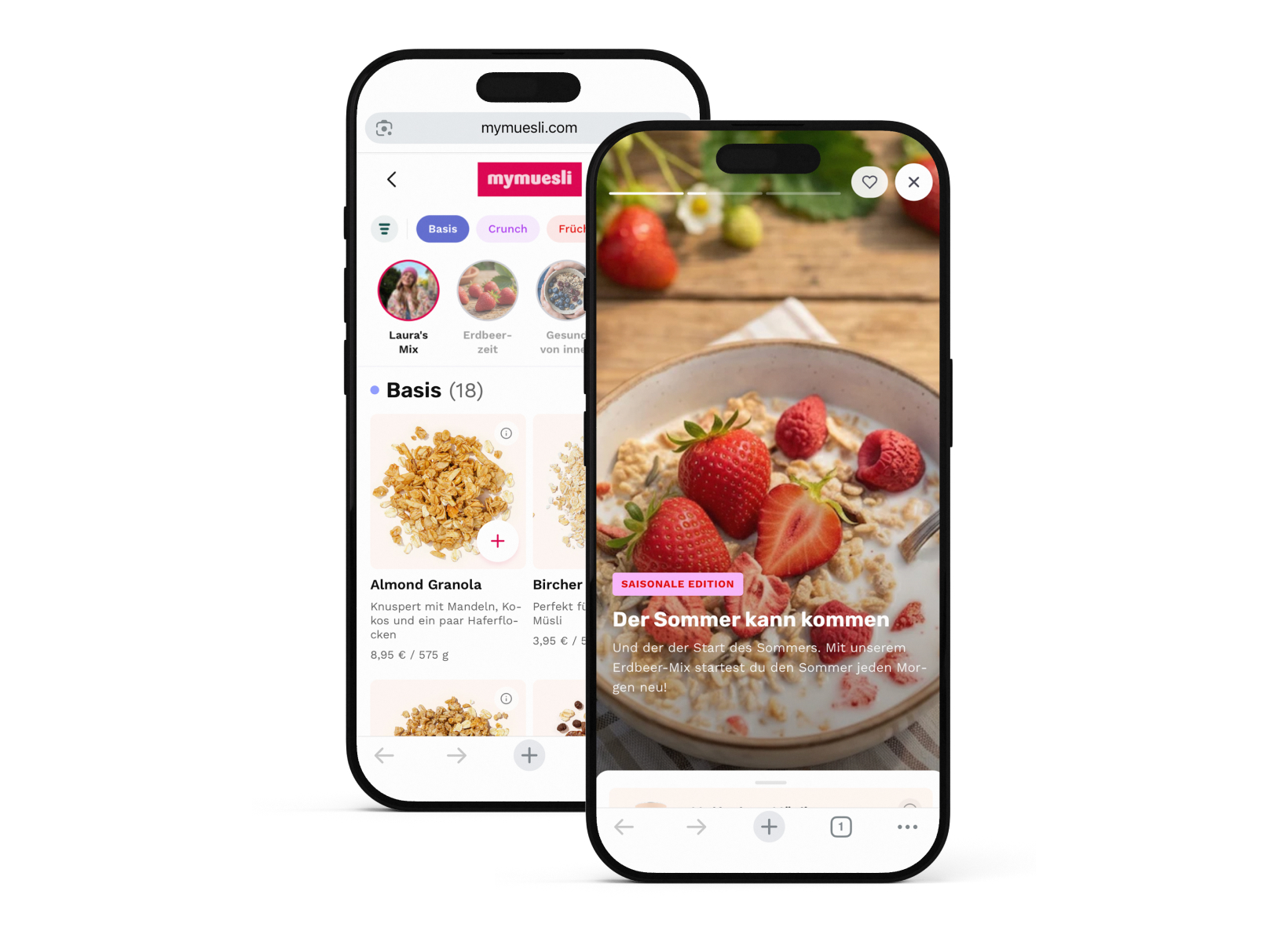
The biggest lever of UX transformation was the introduction of a new storytelling component that transfers the principle of social media to e-commerce. Similar to Instagram Stories, customers navigate through interactive theme worlds that offer adaptive inspiration.
mymuesli provided strategic use cases, which our experts in AI-supported UX design then systematically translated into a functional user experience:
1. Influencer stories for personalized recommendations
Within the new mymuesli influencer stories, users can, for example, add an influencer's favorite cereal mix directly to their shopping cart. At the same time, individuality is maintained: Unwanted ingredients can be easily replaced using the configurator.
2. Community stories for data-driven trends
The Community Stories section transparently shows which ingredients are the most popular in the current week or which finished mixes have been ordered most frequently by the mymuesli community.
3. Health & Seasonal Stories for event-related e-commerce
With the Health & Seasonal Stories formats, the food brand mymuesli specifically addresses health priorities or seasonal events such as Easter and Christmas.
With this shift from a pure configurator to a social experience, the project is pursuing clear goals: The new interaction options should significantly increase the length of stay, increase sales and sustainably improve the overall traction of the cereal mixer.
Generative engineering: AI as a lever for maximum development speed
In order to realize the ambitious vision of the cereal mixer in the shortest possible time, AI was integrated as a measurable accelerator in every phase of value creation — the entire conceptual work involved around 80% AI. According to mymuesli, what might have taken a year in a classic architecture was delivered in a few weeks in collaboration with Etribes as an expert for scalable AI projects through “generative engineering.”
AI decisively drove the relaunch project forward in three key use cases:
1. AI prototyping with Figma Make
After clarifying the strategic routes with MyMuesli Management, the UX concept was implemented directly in an AI prototype with Figma Make. The special thing about it: This AI prototype could be published and operated like an interactive live website. Without AI, the design team would have had to test individual click flows in a time-consuming and isolated manner during the conception phase. Through the use of AI, a tangible overall product was immediately available that provided deep insights for feature optimization.
The consumption of around 300,000 Figma tokens for rapid testing of hundreds of design variants shows how intensive this iterative optimization was — the regular user limit is just 3,500 tokens per month.
2. Automated UX research and AI documentation with Dovetail
With the live prototype of the mymuesli mixer, qualitative test runs could be carried out with eight people under real conditions in order to identify errors in the UX at an early stage. The approximately one-hour interviews were recorded and then evaluated completely automatically using the AI tool Dovetail. In addition, the project team generated user story drafts from the UX prototype, which were discussed and prioritized in the Asana PM tool.
3. AI-based development handover with Claude Code
Probably the biggest paradigm shift concerned the handover to the development team. Traditional, small-scale design files or endless specification documents became superfluous. The mymuesli developers — who completed a parallel onboarding to Claude Code — were only given the URL of the finished prototype website. The developers were able to crawl this website with their AI and extract the corresponding specifications and code fragments from it. A classic, manual handover no longer took place, which significantly accelerated the time-to-market.
The impact of these AI levers was enormous: The concept work alone, which was traditionally estimated to take at least six weeks, was completely completed in just two weeks. Including the start of implementation and code development, the entire MyMuesli project was completed in just eight weeks.
The right balance in generative engineering
The relaunch of the mymuesli mixer impressively shows that generative AI can massively shorten development cycles. But an honest look at an AI-First approach also reveals that precision craftsmanship, expert knowledge and human orchestration remain essential to form a market-ready product from AI-generated designs.
80% AI: Scale and speed in design
The concept of pure user experience — from initial user flows to functional wireframing — could be set up at high speed using AI tools. Even in the last step, the automated handover, the final technical specifications for the development team were almost completely generated by Claude and Figma Make.
20% human: orchestration as a UI/UX bridge
AI models build efficient functional grids, but do not generate brand-specific emotions. At this point, the precision craftsmanship of our UX/UI experts was essential. This human commitment was decisive for two reasons: On the one hand, clever interactions had to be defined that solved all problems of the initial UX audit in a targeted manner and strategically realigned the experience. On the other hand, it was necessary to design the core visual elements in order to seamlessly merge the designed UX with the mymuesli brand experience. Only after this strategic and visual “baseline” had been set by the design team was the AI able to take over again and output the final dev specifications cleanly.
From concept to real value creation
The mymuesli case proves that the added value of artificial intelligence is no longer a theoretical promise — it is market-proven and measurable. The decisive question for companies is no longer “whether,” but “How do we bring AI into productive use? ”
The answer lies not in endless proof-of-concepts, but in doing. As the relaunch project shows, two levers in particular work together on the way to a production-ready solution:
Generative engineering for maximum speed
Anyone who uses AI tools not as a mere gimmick but as an integral accelerator in prototyping, testing and code handover drastically shortens their time-to-value. Months become weeks.
Modular UX templates for real business impact
Technological speed only has its economic impact when it consistently meets the needs of users. Systematically derived and scalable story templates turn a purely functional tool into a converting brand experience.
It is precisely at this interface of strategic UX design and AI-supported development that we support our customers. Anyone who implements technological levers in a targeted manner and at the same time builds a robust foundation will reliably ensure that AI initiatives successfully scale across the company.
Find out on our service page more about how our AI experts help you with concrete AI implementation and sustainable AI adoption.